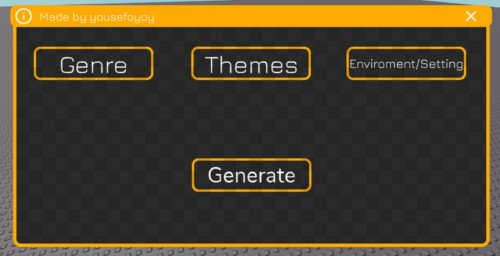
Ever stared at a blank screen, a fresh notebook page, or even a buzzing Discord server, yearning for a brilliant game idea only to be met with... crickets? Creative blocks are the bane of every game designer, streamer, Dungeon Master, and even casual player. The good news? You don't have to wait for inspiration to strike. You can build a tool that generates it for you. Learning how to build your own random game generator isn't just about escaping creative ruts; it's about unlocking a constant stream of novel concepts, challenges, and adventures.
This guide will equip you with the knowledge and practical steps to construct your very own idea machine, whether you're a coding novice or an experienced developer looking for a new side project. We'll explore the foundational principles, dive into practical examples, and even touch upon leveraging cutting-edge AI.
At a Glance: What You'll Learn
- Why a Game Generator is Your New Best Friend: Discover how these tools shatter creative blocks and enhance engagement.
- The Two Paths to Generation: Understand the core differences between a DIY, code-it-yourself approach and leveraging powerful AI platforms.
- Building It Yourself (The DIY Method): Step-by-step guide to conceptualizing, gathering data, and coding a basic generator.
- Harnessing AI for Playable Ideas: Explore how modern AI can craft not just ideas, but playable game experiences.
- Advanced Features & Best Practices: Learn how to add functionality like locking fields, saving content, and integrating with external data.
- Troubleshooting Common Hurdles: Quick fixes for typical issues you might encounter.
Why Even Bother? The Power of the Random Game Generator
Before we get our hands dirty, let's talk about the "why." Why invest time in creating a random game generator when countless lists of prompts already exist online? The answer lies in personalization, dynamism, and the sheer joy of discovery.
Think about it:
- For Indie Developers: Staring at a whiteboard, trying to conceive that next breakout hit? A generator can fuse unexpected genres, mechanics, and themes, producing procedural quest hooks and even marketing notes that can cut weeks off brainstorming. Imagine a fantasy-themed generator with Gemini AI, churning out unique dungeon scenarios or character backstories.
- For Twitch Streamers: Decision fatigue is real when trying to pick a game that will engage your audience. A randomized game picker, pulling from a live database, transforms this into an interactive event. Streamers have seen audience chat activity jump by 30% by using a spinning wheel to decide their next play, turning game selection into part of the show itself.
- For Tabletop Dungeon Masters (D&D, TTRPGs): Crafting compelling narratives, varied encounters, and intricate worlds is time-consuming. A content generator can whip up dungeon maps with hazards, key rooms, and recommended levels, or even fully fleshed-out RPG characters with structured stats, backstories, and objectives, leading to sessions with record engagement.
- For Game Design Students & Educators: Learning to think outside the box is crucial. Incorporating such a tool into semester projects can push students to create unique quests, characters, and even analyze top-performing games, boosting final project scores significantly.
At its core, a random game generator isn't just a gimmick; it's a dedicated creativity engine designed to push boundaries and streamline your workflow. When you're ready to dive into the world of diverse ideas, you might want to Explore our random game generator to see various approaches in action.
Understanding the Anatomy of a Random Game Generator
Regardless of how you build it, every random game generator operates on a few fundamental principles:
- Data Sets: These are your lists of components. Think genres, themes, mechanics, character archetypes, settings, plot twists, enemies, items, art styles, or even specific adjectives. The richer and more varied your data sets, the more unique your generated ideas will be.
- Randomization Logic: This is the "brain" that picks items from your data sets. It could be as simple as
random.choice()in Python or a more complex algorithm that ensures a certain distribution or avoids illogical combinations. - Combination Rules: How do these random selections fit together? Do you always need a genre + a theme + a mechanic? Or can you sometimes get just a character concept? These rules define the structure of your output.
- Output Format: How is the idea presented? A simple text string? A structured JSON object? A visual representation like a spinning wheel?
With these elements in mind, let's explore the two primary ways to bring your generator to life.
Path 1: Building It Yourself – The DIY Code-Based Generator
This path gives you ultimate control. You define every list, every rule, and every line of code. It's incredibly rewarding and a fantastic way to sharpen your programming skills.
Step 1: Define Your Scope – What Kind of Generator Do You Need?
Before writing a single line of code, clarify what problem your generator will solve.
- Idea Generator: Focuses on high-level concepts (e.g., "A rogue-lite RPG set in a haunted carnival where you play as a sentient teddy bear"). This type is perfect for overcoming creative blocks and fostering initial brainstorming. You'll likely need categories like:
- Genre (RPG, Platformer, Puzzle, Strategy)
- Setting (Sci-Fi, Fantasy, Post-Apocalyptic, Historical)
- Core Mechanic (Gravity Manipulation, Time Travel, Resource Management)
- Protagonist (Alien Mercenary, Cursed Knight, Sentient AI)
- Goal (Escape, Protect, Conquer, Discover)
- Game Picker: Designed to choose from an existing list of games. Useful for streamers, friend groups, or just deciding what to play next. This will mostly focus on integrating with a game database.
- Content Generator: Generates specific assets or narrative elements for an existing game or campaign (e.g., "A dwarven alchemist named Borin Stonebeard who seeks rare herbs in the Whispering Caves"). This requires more detailed data sets for things like:
- Character Name (First, Last, Title)
- Race/Species
- Class/Profession
- Personality Trait
- Motivation
- Location Name
- Hazard Type
- Quest Objective
Start simple. You can always expand later. For this guide, let's assume we're building a basic Idea Generator.
Step 2: Gather Your Data – The Lifeblood of Your Generator
Your data can be stored in simple lists within your code, or in external files like .txt, .csv, or .json for easier management.
Let's create some example lists for an Idea Generator:
python
Python example data sets
genres = ["Action-Adventure", "Roguelike", "Puzzle-Platformer", "Survival Horror", "Strategy RPG", "Visual Novel", "Card Battler"]
settings = ["A sprawling steampunk metropolis", "A forgotten underwater civilization", "The desolate moon of an alien world", "A magical forest where seasons shift unpredictably", "The digital realm of a retro arcade game"]
mechanics = ["Time manipulation", "Gravity inversion", "Procedural crafting", "Mind control abilities", "Companion AI with complex emotions", "Dynamic weather affecting gameplay"]
protagonists = ["A clumsy wizard's apprentice", "A lone robot scout", "A shapeshifting detective", "A group of sentient plants", "The last surviving member of an ancient order"]
goals = ["Uncover a cosmic conspiracy", "Restore balance to a dying world", "Escape a deadly labyrinth", "Collect rare artifacts before rivals", "Defend your home from an invading force"]
Pro-Tip: Don't just list nouns. Add descriptive adjectives or short phrases to make the ideas more evocative from the start. "A haunted house" is good, but "A dilapidated Victorian manor haunted by glitching digital ghosts" is better.
Step 3: Choose Your Tools – The Tech Stack
For a DIY generator, you don't need anything fancy.
- Python: Excellent for beginners, with a clear syntax and powerful libraries for handling data and random choices. You can run it from a simple script.
- JavaScript (with HTML/CSS): If you want a web-based generator that runs in a browser, JavaScript is your friend. You'll need basic HTML for the interface and CSS for styling.
- Spreadsheets (Google Sheets/Excel): Believe it or not, you can build surprisingly robust generators using spreadsheet functions like
RANDBETWEENandVLOOKUP. It's a low-code approach perfect for quick prototyping or non-programmers.
For simplicity, we'll demonstrate with Python, as it's versatile for both simple scripts and more complex applications.
Step 4: Build the Core Logic – Random Selection & Combination
This is where the magic happens. You'll import a random module and select one item from each of your lists.
python
import random
(Assume the data sets from Step 2 are defined here)
def generate_game_idea():
selected_genre = random.choice(genres)
selected_setting = random.choice(settings)
selected_mechanic = random.choice(mechanics)
selected_protagonist = random.choice(protagonists)
selected_goal = random.choice(goals)
idea = f"Imagine a {selected_genre} game set in {selected_setting}. You play as {selected_protagonist}, using {selected_mechanic} to {selected_goal}."
return idea
To get an idea:
print(generate_game_idea())
This basic structure provides a solid foundation. You can run this in a terminal, and each time you execute the generate_game_idea() function, you'll get a new, unique game concept.
Step 5: Refine and Enhance – Making It More Useful
Once you have the basics down, you can add layers of functionality.
- User Interface: For Python, libraries like
TkinterorPyQtcan create desktop apps. For web, HTML forms and JavaScript event listeners make an interactive experience. - Saving Ideas: Add a button or command to save generated ideas to a text file or a simple database.
- "Lock" Fields: A crucial feature for brainstorming. If you love the genre but not the setting, you want to regenerate just the setting. This requires adding logic to your selection process:
python
def generate_game_idea_with_locks(locked_genre=None, locked_setting=None):
current_genre = locked_genre if locked_genre else random.choice(genres)
current_setting = locked_setting if locked_setting else random.choice(settings)
... and so on for other categories
idea = f"Imagine a {current_genre} game set in {current_setting}. ..."
return idea
Example: Lock the genre, regenerate others
print(generate_game_idea_with_locks(locked_genre="Survival Horror"))
- Weighted Choices: Some categories might have common items you want to appear more frequently. You can achieve this by duplicating entries in a list or using
random.choices()with aweightsparameter in Python. - External Data Integration: For Game Pickers, you might integrate with APIs like RAWG Game Database to pull live game data. This involves making HTTP requests to an external server. Remember to handle API keys securely, perhaps through environment variables, and implement retry logic for potential API errors. When working with live databases, troubleshooting involves checking server-side proxy configurations and rotating API gateway keys if necessary.
Mini Case Snippet: The Indie Dev's Custom Quest Generator
An indie game developer, stuck on creating side quests for their upcoming RPG, decided to build a simple Python-based content generator. Their data.json file contained lists of quest-givers, objectives, rewards, and locations. With a few lines of code, they could generate hundreds of unique quest hooks, like: "Help the eccentric alchemist Elara find three Moonpetal Flowers in the Whispering Fen to brew a potion of invisibility, rewarding you with a rare enchanted dagger." This procedural generation, powered by their custom tool, cut two weeks of brainstorming time and produced far more diverse ideas than they could have conceived manually.
Path 2: Harnessing AI for Playable Game Generators
While building a code-based generator is powerful, the landscape of game generation is evolving rapidly with AI. Instead of just generating ideas, some AI tools can generate playable games directly from your prompts. This is a game-changer if your goal is rapid prototyping or exploring concepts in a tangible form without extensive coding.
The Rise of AI-Powered Playable Generators
Tools like YouWare AI Game Generator are at the forefront of this revolution. They differentiate themselves by moving beyond static previews to actual interactive experiences. The core idea is "co-building" – you describe, the AI generates, and you interact with and adjust the game directly.
How AI-Powered Generators Work (The 3-Step Process)
- Describe Your Game Idea: You start with a simple text prompt. The AI acts like a highly skilled junior developer, translating your natural language into game logic.
- Example: "A jumping game with obstacles."
- Refinement: You can add themes ("a fantasy world," "a sci-fi setting") or specify player actions ("collect coins," "avoid lasers"). The AI often provides suggestions to help complete your vision.
- Try and Tweak Directly: This is where AI generators truly shine. Instead of getting a text output, you get a playable prototype.
- Direct Editing: If a character jumps too high, you click on the character or the jump mechanic directly on the screen and adjust its properties. If the enemies move too fast, you can visually slow them down.
- Visual Polish: You can often ask the AI to improve colors, layout, or overall flow with a single command, without altering the underlying gameplay behavior.
- Co-building: Some advanced platforms allow you to record your screen while playing, point to specific elements, and vocalize desired changes. The AI interprets your feedback and adjusts the game in real-time. This iterative process is incredibly efficient for design.
- Share Your Creation: Once you're happy with your game, you can share it with others. Most platforms offer version history, so every iteration of your game is saved, allowing you to revert to earlier designs if needed.
Benefits of AI-Powered Game Generators:
- Speed: Go from concept to playable prototype in minutes, not hours or days.
- Accessibility: No coding knowledge required. Focus purely on design.
- Tangibility: Instantly see your ideas in action, allowing for quicker iteration and discovery of what works (or doesn't).
- Diverse Output: Capable of generating interactive learning games, story and choice-based games, simple arcade experiences, and more.
Mini Case Snippet: The Educator's Interactive Learning Game
A game design school instructor needed engaging games for a new semester project. Instead of having students spend weeks on basic coding, they leveraged an AI game generator. Students described their educational concepts, like "a puzzle game about historical figures finding lost artifacts" or "a choice-based story about ethical dilemmas." Within an hour, they had playable prototypes. The ability to click directly on elements to change rules or text, and even "co-build" with voice commands, allowed them to focus on pedagogical design rather than debugging, boosting final project scores by 25%.
Advanced Concepts for Your Random Game Generator
Whether you're coding it yourself or using an AI platform, consider these advanced features to make your generator truly powerful:
1. Contextual Generation / Dependency Rules
Sometimes, you don't want completely random combinations. A "sci-fi" genre might exclude "medieval fantasy" settings.
- DIY Implementation: Create conditional logic. If
selected_genreis "Sci-Fi," thenselected_settingmust come from asci_fi_settingslist, not a genericsettingslist. - AI Implementation: Modern AI models are inherently good at understanding context. By adding more detail to your initial prompt, you guide the generation towards coherent results.
2. Output Export Options
Once you've generated fantastic ideas or content, you'll want to save and share it.
- DIY Implementation: Implement "Export to PDF" or "Export to JSON" functionality. JSON is particularly useful for structured data that other applications can easily consume.
- AI Implementation: Many platforms automatically save versions and offer direct sharing links. Planned enhancements for tools like the Random Game Generator often include PDF/JSON export options for generated content, recognizing the need for interoperability.
3. Community Features & Sharing
Generators thrive on shared creativity.
- DIY Implementation: If you build a web-based generator, consider adding features for users to submit new data entries (e.g., new genres, mechanics) or share their favorite generated ideas on social media.
- AI Implementation: Built-in sharing tools are common, allowing you to easily send your playable game or idea to friends, colleagues, or your audience.
4. Top 50 Live Rankings (for Game Pickers)
If your generator focuses on picking existing games, a "Top 50 Live Ranking" (updating every few minutes) can add immense value, especially for streamers or those looking for trending titles.
- DIY Implementation: This requires integrating with a game database API (like RAWG), fetching trending data, and caching it on your server for quick retrieval.
- AI Implementation: Less common for AI-generated playable games, but a game picker part of a broader tool might leverage this for inspiration.
5. Robust Error Handling & Troubleshooting
Things will break. It's part of the process.
- API Errors: If your generator relies on external APIs (like the RAWG Game Database or a Cloudflare AI Gateway for Gemini-powered ideas), anticipate connection issues. Implement retry mechanisms, clear error messages, and guide users on troubleshooting steps. This might involve advising them to check their environment variables, rotate API keys, or simply "try again in a few moments."
- Data Validation: Ensure your input data is clean and your generator can handle unexpected entries without crashing.
Common Questions About Random Game Generators
"Is building a game generator difficult if I'm not a programmer?"
Not at all! You can start with simple text files and a bit of Python for a basic generator. For those completely new to code, using spreadsheet functions (like RANDBETWEEN and VLOOKUP) or leveraging AI-powered platforms are fantastic entry points. The hardest part is often just getting started and defining your first lists.
"Can I make money with a random game generator?"
Directly, perhaps not for a simple one. However, it can indirectly boost your income by:
- Streamers: Increasing audience engagement and viewership.
- Indie Devs: Speeding up ideation, leading to more (and better) game concepts.
- Content Creators: Generating unique content for articles, videos, or campaigns.
- Consultants/Designers: Using it as a powerful brainstorming tool for clients.
Some sophisticated generators with unique features or advanced AI integrations could potentially be offered as a service or product.
"What if the ideas it generates are bad or nonsensical?"
That's part of the fun!
- Embrace the Absurd: Sometimes the most outlandish combinations spark truly novel thinking. "A turn-based strategy game where you manage a colony of sentient fungi on a forgotten space station" might sound silly, but it could be brilliant.
- Refine Your Data: If you consistently get irrelevant results, refine your data sets. Add more focused keywords, remove overly generic ones, or implement contextual rules (as discussed in Advanced Concepts).
- Use Locking Features: If a specific part of an idea is good, lock it and regenerate the rest. This iterative refinement is key.
- AI Feedback Loops: With AI generators, direct editing and "co-building" allows you to immediately correct "bad" parts of a generated game.
"How much data do I need for a good generator?"
Quality over quantity initially. Start with 10-20 strong entries per category. As you use the generator, you'll naturally identify gaps and areas to expand. For comprehensive content generation (like RPG characters or dungeon maps), you'll need significantly more structured data, potentially hundreds of entries across various interlinked categories. The more detailed your data, the more specific and rich the output.
Ready to Generate Your Next Big Idea?
The journey to building your own random game generator is a rewarding one, whether you're meticulously crafting Python scripts or intuitively guiding an AI. It's an investment in your creativity, a tool to bypass the dreaded blank page, and a dynamic way to discover game concepts you never would have imagined otherwise.
Start small. Pick a type of generator – an idea generator for genres, settings, and mechanics is a great entry point. Gather your first set of keywords, write a few lines of code (or open an AI game generator platform), and hit that "generate" button. The more you experiment, refine your data, and embrace the randomness, the more powerful and indispensable your personal creativity engine will become. Don't just wait for inspiration; build the machine that creates it.